 VapeWholesaleHub
Atomizers vs Standard Alternatives: What Changes for Your Shelf — Premium Shelf Programmes
This page is written for the person who has to sign the purchase order, not for the person who designed the packaging. If you are weighing up atomizers right now, the sections below follow the order in which the real decisions tend to arrive.
Getting Atomizers to Your Warehouse
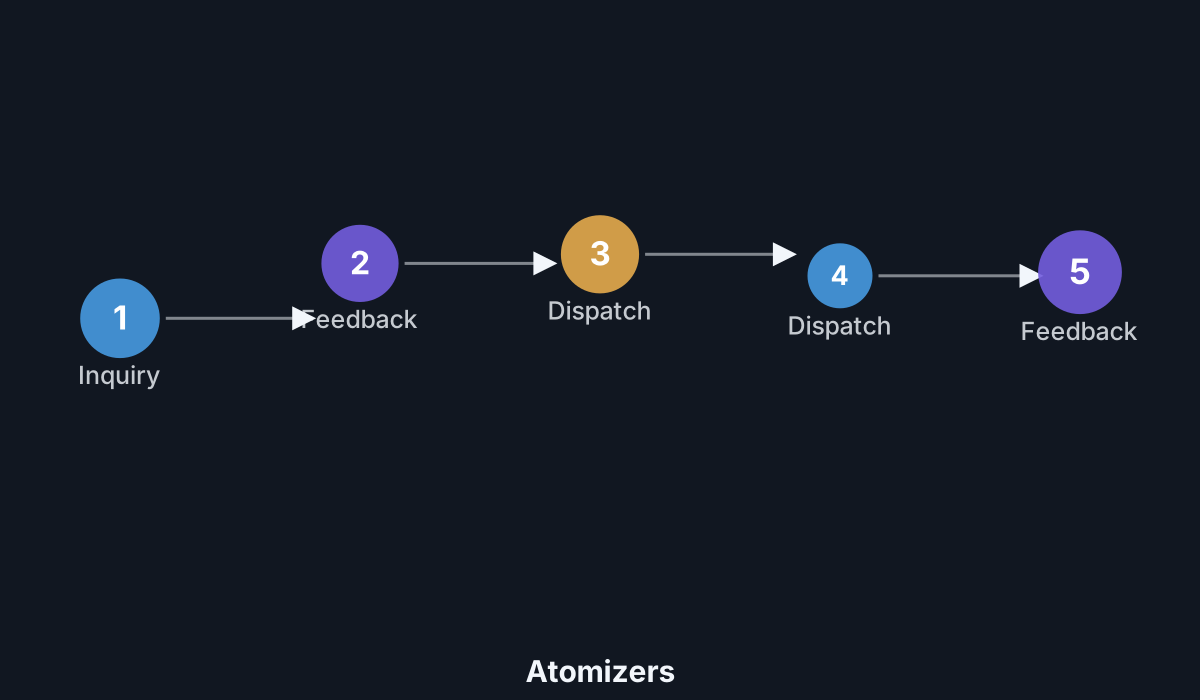
Air freight makes sense for a first atomizers order when you need to test demand quickly, but almost every steady programme moves to sea freight once volumes stabilise. Planning that switch early avoids a painful margin squeeze later.
Customs classification for atomizers varies by market and changes from time to time. We ship with full documentation, but your broker should confirm the current code before your first order rather than after it lands.
How Atomizers Fits the Assortment
Range decisions for atomizers should start from shelf space, not from a supplier catalogue. Count the facings you actually have, then decide how many of them this line deserves against what it currently earns.
Modelling a Healthy Margin
When you model atomizers pricing, build in a realistic shrink figure. Even a well run line loses a small percentage to damage, expiry and sampling. Pretending that number is zero is how a healthy looking margin turns negative.
Discounting atomizers to win shelf space tends to reset customer expectations permanently. Volume support in kind, such as display material, usually costs less in the long run.
Indicative reference points for planning purposes: entry tier from USD 1.68 per unit at 2000 units, mid tier at USD 1.51, and volume tier at USD 1.39 for full container quantities. These figures move with specification, packaging and freight, so treat them as a shape rather than a quote.
The Specification That Matters
Ask for the atomizers specification in the same units you intend to measure in. A metric quoted in a form you cannot verify on arrival is not a specification, it is a claim.
Pay attention to how a atomizers supplier responds when you ask for a tolerance they do not want to commit to. The hesitation is usually more informative than the eventual answer.
| Product category | Open system |
|---|---|
| Resistance band | 0.6 - 0.8 ohm |
| Capacity tolerance | +/- 2% |
| Puff count method | Machine cycle 3s on / 27s off |
| Master carton | 100 units |
| Carton weight | 12.1 kg |
| Shelf life | 18 months |
| Storage | 15-25 C, dry, away from direct light |
Market Signals
Demand for atomizers has been steadily rebalancing. The early phase rewarded whoever could ship fastest; the current phase rewards whoever can ship the same thing twice. That shift favours buyers who invest in specification rather than price shopping.
Expect atomizers packaging requirements to keep tightening. Designs that leave room for additional labelling age better than tight layouts that need a full reprint to comply.
How Atomizers Batches Are Checked
Random checks are fine, but weight the sample towards the start and end of a atomizers production run. Those are where a line is most likely to drift.
- Check carton dimensions against your freight quote before confirming.
- Rotate stock by batch code rather than by delivery date.
- Write the complaint threshold into the order terms.
- Agree the tolerance band in writing before approving artwork.
- Model landed cost, not ex-works price, when comparing quotes.
Practical Checklist
- Plan the switch from air to sea freight before you need it.
- Start with a mixed carton and let your own sell-through decide.
- Write the complaint threshold into the order terms.
- Model landed cost, not ex-works price, when comparing quotes.
- Check carton dimensions against your freight quote before confirming.
- Ask how the factory measures puff count, then compare like with like.
Frequently Asked Questions
What information do you need to quote?
Target specification, approximate quantity, destination and any packaging requirement. With those four we can usually come back with a costed option the same working day rather than a request for more information.
Is there a warranty on atomizers?
Manufacturing defects are covered against the retained sample standard. Normal wear, misuse and damage after opening are not. We publish the threshold in the order terms so both sides know exactly what the claim process looks like.
What if I only need a small first order?
That is normal and sensible. A mixed carton lets you test atomizers in your own market before committing to a production run, and the specification you approve at that stage carries through to larger orders unchanged.
How should atomizers be stored?
Cool, dry and out of direct sunlight. Heat and light are the two things that shorten shelf life fastest. Rotate stock by batch code rather than by arrival date, and keep cartons off concrete floors in humid warehouses.
What is the usual minimum order for atomizers?
For a standard production run the minimum is normally one master carton per flavour, though mixed cartons can be arranged for a first order. If you are testing the line, ask about a sample pack first and treat the freight as part of your research budget.
Next Step
Questions that are not answered here are usually the interesting ones. Reach out with the specifics of your market and we will answer with numbers rather than adjectives.
Related Reading
- Atomizers Bundle Pricing That Moves Older Stock — Repeat Orders
- How to Store Atomizers Stock Without Losing Freshness — Step by Step
- Atomizers Reorder Discipline for Busy Distributors — Latin America
- Atomizers Strengths Ladder for a Balanced Cabinet — Tight Margin Categories
- Atomizers Protecting Your Private Label Design — Container-Scale Orders
- Atomizers Import Duty Planning for Distributors — Real Numbers Only