 VapeWholesaleHub
Atomizers Product Testing Laboratories Explained — Seasonal Demand Peaks
Everything below applies whether you are ordering one mixed carton or a full container. The numbers scale, but the logic does not change, which is the point of writing it down once.
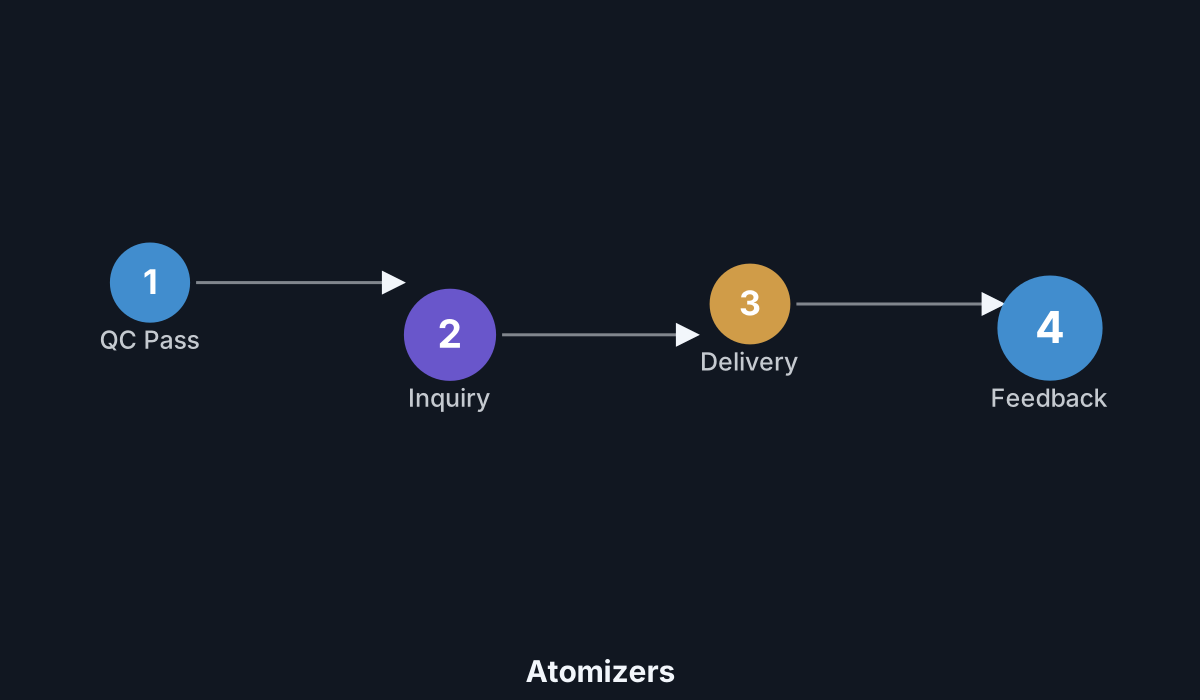
Turning Atomizers Into Repeats
Put atomizers where the decision is made, not where the margin is highest. In most stores that means near the counter or at eye level in the category, rather than wherever there is spare space.
Freight, Customs and Timing
Split atomizers shipments across two sailings when the order is large enough. It costs slightly more but removes the risk of a single event wiping out a full quarter of stock.
Consolidating atomizers with other lines is often the biggest single saving available to a mid size importer. The unit cost does not change but the landed cost does, sometimes materially.
Market Signals
Assortment rationalisation is the quiet trend in this category. Shops that cut their atomizers range from twelve lines to five well chosen ones often report higher total sales, not lower.
How Atomizers Batches Are Checked
Random checks are fine, but weight the sample towards the start and end of a atomizers production run. Those are where a line is most likely to drift.
- Keep sealed retained samples from every production batch.
- Check carton dimensions against your freight quote before confirming.
- Ask how the factory measures puff count, then compare like with like.
- Write the complaint threshold into the order terms.
- Start with a mixed carton and let your own sell-through decide.
How Atomizers Fits the Assortment
A tight atomizers range with deep availability usually outsells a wide range with thin stock. Customers who find their line in stock come back; customers who are told to wait do not.
Decide early whether atomizers is a traffic driver or a margin line in your store. The answer changes how you price it, where you place it and how hard you push it at the counter.
Practical Checklist
- Write the complaint threshold into the order terms.
- Model landed cost, not ex-works price, when comparing quotes.
- Ask how the factory measures puff count, then compare like with like.
- Rotate stock by batch code rather than by delivery date.
- Plan the switch from air to sea freight before you need it.
- Confirm the current customs classification with your own broker.
Frequently Asked Questions
Do you hold stock for regular customers?
For established programmes we can reserve production slots and, in some cases, hold finished atomizers stock against a forecast. It removes most of the lead time risk from a reorder and is worth discussing once volumes are stable.
What is the usual minimum order for atomizers?
For a standard production run the minimum is normally one master carton per flavour, though mixed cartons can be arranged for a first order. If you are testing the line, ask about a sample pack first and treat the freight as part of your research budget.
What does a sample pack usually include?
A typical atomizers sample pack covers the strengths or variants you are most likely to list, packed so you can evaluate them side by side. Tell us which lines you are considering and we will match the pack to that rather than sending a generic selection.
Do you provide compliance documents?
Every shipment leaves with the documentation set relevant to your market, including batch records and test reports where required. Your local rules still determine what you must file, so confirm those with your broker before import.
Next Step
We would rather quote you accurately and lose the order than quote optimistically and lose the relationship. Ask us the awkward questions early.
Related Reading
- Atomizers Mouthpiece Geometry and Comfort — High Volume Buyers
- Atomizers Competitor Range Teardown — Updated for 2026
- Atomizers Buyer FAQ for First Time Importers — Cross-Border Trade
- Atomizers Documentation Pack for Customs Brokers — Updated for 2026
- Atomizers Approval Workflow From Sample to Shipment — Replenishment Cycles
- Seasonal Planning for Atomizers Inventory — Cross-Border Trade