 VapeWholesaleHub
Atomizers Factory Visit Preparation Checklist — Entry-Level Price Points
There is no clever trick to buying atomizers well. There is a short list of things worth checking and a long list of things that distract from them. This page is an attempt at the short list.
Where Demand Is Heading
The atomizers category is consolidating around suppliers who can document what they ship. Buyers who built that requirement into their process early are now finding it much easier to scale.
One shift worth planning for: shorter atomizers reorder cycles with smaller average drops. It favours suppliers with flexible production slots over those who only want large annual commitments.
Merchandising and Listing Tips
Keep the atomizers range tidy. A half empty shelf reads as a dying line, and customers interpret it that way faster than any signage can correct.
What Atomizers Really Costs Landed
Discounting atomizers to win shelf space tends to reset customer expectations permanently. Volume support in kind, such as display material, usually costs less in the long run.
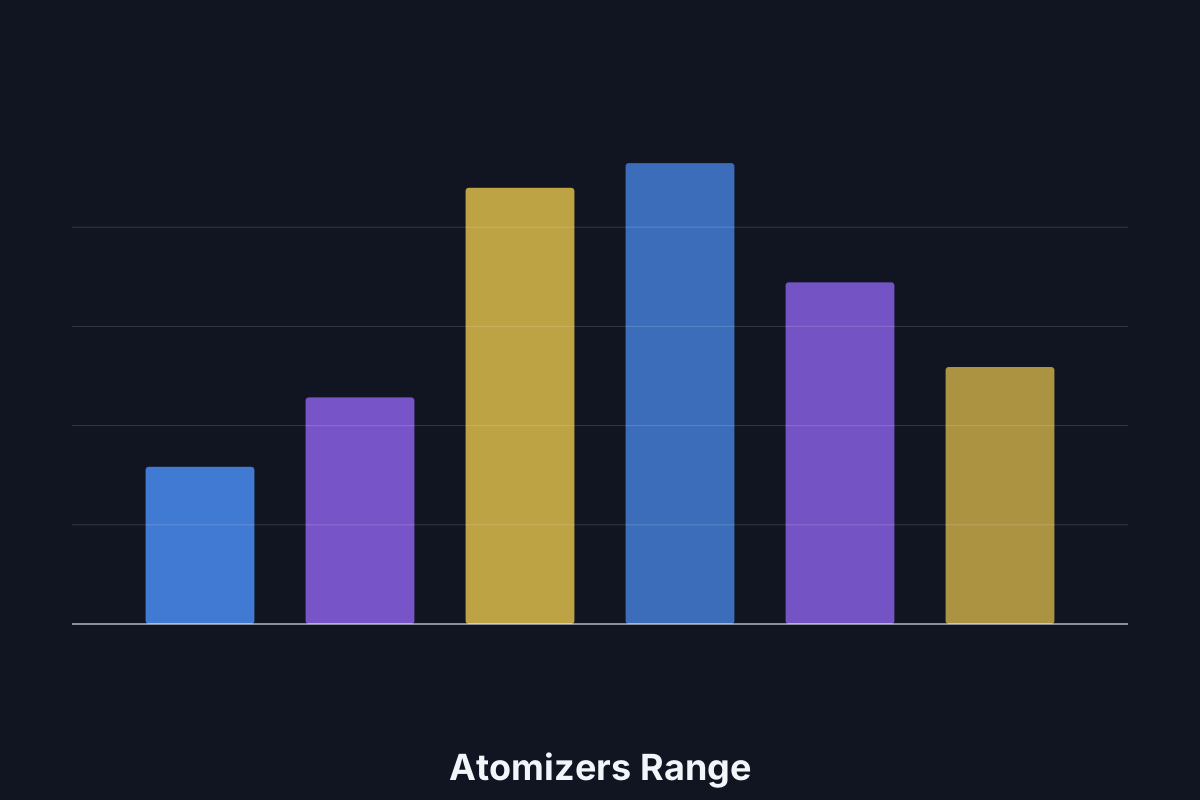
Indicative reference points for planning purposes: entry tier from USD 2.08 per unit at 2000 units, mid tier at USD 0.96, and volume tier at USD 1.18 for full container quantities. These figures move with specification, packaging and freight, so treat them as a shape rather than a quote.
Positioning Atomizers on Your Shelf
One useful exercise: list every atomizers line you stock and mark the last date each one sold at full price. Anything without a recent full price sale is taking space from something that would use it better.
The Specification That Matters
Where possible, tie part of the atomizers payment to inspection against the written spec. It focuses attention on the numbers rather than on the relationship.
Good atomizers specs describe the failure boundaries, not just the target. Stating what is unacceptable gives the factory a clear production window instead of a single point they will miss half the time.
| Product category | Open system |
|---|---|
| Resistance band | 1.0 - 1.2 ohm |
| Capacity tolerance | +/- 3% |
| Puff count method | Machine cycle 3s on / 27s off |
| Master carton | 400 units |
| Carton weight | 8.4 kg |
| Shelf life | 24 months |
| Storage | 15-25 C, dry, away from direct light |
Practical Checklist
- Plan the switch from air to sea freight before you need it.
- Keep sealed retained samples from every production batch.
- Ask how the factory measures puff count, then compare like with like.
- Check carton dimensions against your freight quote before confirming.
- Model landed cost, not ex-works price, when comparing quotes.
- Confirm the current customs classification with your own broker.
Frequently Asked Questions
How should atomizers be stored?
Cool, dry and out of direct sunlight. Heat and light are the two things that shorten shelf life fastest. Rotate stock by batch code rather than by arrival date, and keep cartons off concrete floors in humid warehouses.
Is there support for in-store material?
Yes. Shelf talkers, counter cards and simple planogram suggestions are available for atomizers ranges that reach a sensible volume. Most retailers find the plain strength and flavour cards do the most work.
What if a batch does not match the sample?
Keep the retained samples from the approval stage. If a delivered batch measurably differs, we compare against the retained set and resolve it against the production record. This is why we insist on sealed retained units from every run.
What is the usual minimum order for atomizers?
For a standard production run the minimum is normally one master carton per flavour, though mixed cartons can be arranged for a first order. If you are testing the line, ask about a sample pack first and treat the freight as part of your research budget.
Can I visit the production facility?
Yes, and we encourage it for larger programmes. Visits are most useful when you already have a draft specification, because you can then check the specific processes behind the numbers you care about.
Next Step
If you are comparing options right now, send us the specification you have been quoted elsewhere. A side by side reading usually shows where the price difference actually comes from, and that is the most useful first conversation to have.
Related Reading
- Atomizers Tooling and Moulding Cost Structures — Mixed Cabinets
- Comparing Atomizers Factory Tiers and What You Get — Duty and Tax Worked Out
- What a Atomizers Production Slot Really Means — Real Numbers Only
- Atomizers Quality Drift: Catching It Before Customers Do — High Volume Buyers
- Atomizers Tamper Evidence and Seal Integrity — Before Your Next Order
- Atomizers Copy That Answers Buyer Objections — Container-Scale Orders