 VapeWholesaleHub
Atomizers Bundle Pricing That Moves Older Stock — North America
We ship atomizers to distributors in very different markets, and the same five questions come up almost every week. Rather than answer them in email each time, we have written them out properly here.
Where Atomizers Sits in the Range
Atomizers sits at an interesting point in the assortment. It is familiar enough to be an impulse purchase and specific enough to build a repeat pattern around. Treating it as either pure commodity or pure specialty both lead to poor results.
How Atomizers Batches Are Checked
The defect rate that matters is the one your customer experiences, not the one the factory reports. Bridge that gap by inspecting the way a customer would open the box, not the way a line worker packs it.
AQL sampling gets a lot of attention, but for atomizers the more useful habit is simply measuring the same three things on every single batch. Trend lines catch problems that pass/fail checks miss.
- Check carton dimensions against your freight quote before confirming.
- Agree the tolerance band in writing before approving artwork.
- Rotate stock by batch code rather than by delivery date.
- Plan the switch from air to sea freight before you need it.
- Keep sealed retained samples from every production batch.
What Atomizers Really Costs Landed
Tiered pricing works best when the tiers match real customer behaviour. Most atomizers buyers will take the second tier if the step is modest and the third tier only if they can see a genuine reason to hold more stock.
When atomizers input costs move, ask which component moved. A generic price increase hides whether you are paying for cells, packaging or simply a busy production calendar.
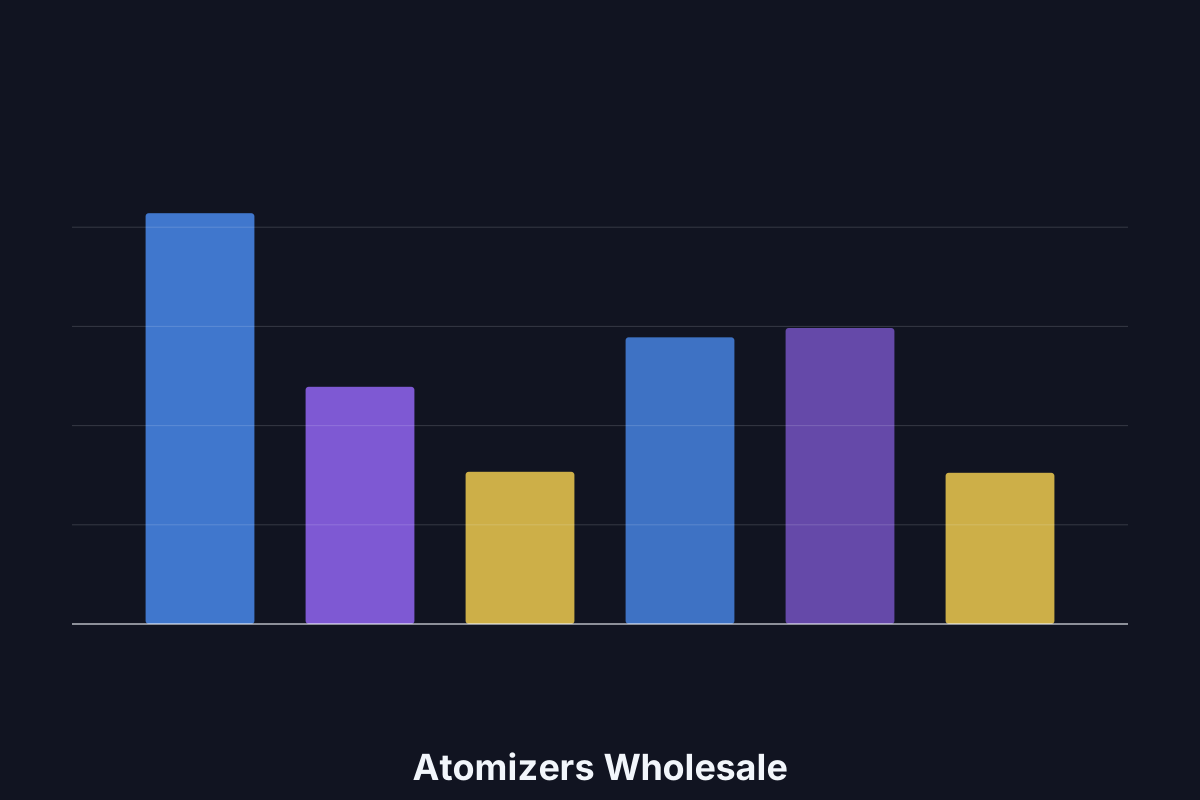
Indicative reference points for planning purposes: entry tier from USD 2.18 per unit at 500 units, mid tier at USD 1.16, and volume tier at USD 1.19 for full container quantities. These figures move with specification, packaging and freight, so treat them as a shape rather than a quote.
Reading a Atomizers Spec Sheet
Pay attention to how a atomizers supplier responds when you ask for a tolerance they do not want to commit to. The hesitation is usually more informative than the eventual answer.
Revisit the atomizers specification after every third order. Small improvements compound, and factories take a buyer more seriously when the document has clearly been used.
| Product category | Open system |
|---|---|
| Resistance band | 0.6 - 0.8 ohm |
| Capacity tolerance | +/- 3% |
| Puff count method | Declared by capacity |
| Master carton | 100 units |
| Carton weight | 8.9 kg |
| Shelf life | 12 months |
| Storage | 15-25 C, dry, away from direct light |
Trends Worth Watching
Traceability is moving from a nice-to-have to a requirement in several atomizers markets. Building the habit now is cheaper than retrofitting record keeping under pressure later.
Selling Atomizers at Store Level
Bundle atomizers with a complementary item rather than discounting it outright. The perceived value holds up better and the second item often becomes a repeat purchase on its own.
Use your atomizers staff training time on the two questions customers actually ask. Anything more detailed gets forgotten by the second shift.
Practical Checklist
- Keep sealed retained samples from every production batch.
- Model landed cost, not ex-works price, when comparing quotes.
- Ask how the factory measures puff count, then compare like with like.
- Agree the tolerance band in writing before approving artwork.
- Write the complaint threshold into the order terms.
- Plan the switch from air to sea freight before you need it.
Frequently Asked Questions
Do you provide compliance documents?
Every shipment leaves with the documentation set relevant to your market, including batch records and test reports where required. Your local rules still determine what you must file, so confirm those with your broker before import.
What does a sample pack usually include?
A typical atomizers sample pack covers the strengths or variants you are most likely to list, packed so you can evaluate them side by side. Tell us which lines you are considering and we will match the pack to that rather than sending a generic selection.
Can you match an existing product I already sell?
Often yes, provided we can measure it properly. Send a physical sample and we will report back on what can be matched, what will differ slightly, and why. An honest gap is more useful than a vague promise.
How are price changes handled on repeat orders?
{K} pricing is reviewed against input costs and volume rather than adjusted casually. Any change is confirmed in writing before the next order is scheduled, with the reason stated so you can judge it yourself.
Next Step
Questions that are not answered here are usually the interesting ones. Reach out with the specifics of your market and we will answer with numbers rather than adjectives.
Related Reading
- Atomizers Pallet Configuration for Mixed Orders — New Distributors
- Atomizers Case Study: From First Pallet to Repeat Container — Landed Cost Worked Through
- Atomizers Quality Drift: Catching It Before Customers Do — Step by Step
- Atomizers Electronic Data Interchange for Large Accounts — Small Batch Buyers
- Atomizers Batch Recall Traceability in Practice — Tight Margin Categories
- Atomizers Review Mining for Product Insight — Before Your Next Order