 VapeWholesaleHub
Atomizers Airflow Design and Customer Perception — Three Price Tiers
Treat atomizers as a repeat purchase category rather than a one off buy. That single change in framing alters almost every decision downstream, from carton size to how many strengths you list.
What Atomizers Really Costs Landed
Build atomizers price tiers around order sizes your customers actually place. Tiers that only make sense on a spreadsheet get ignored, and you end up discounting ad hoc instead.
Discounting atomizers to win shelf space tends to reset customer expectations permanently. Volume support in kind, such as display material, usually costs less in the long run.
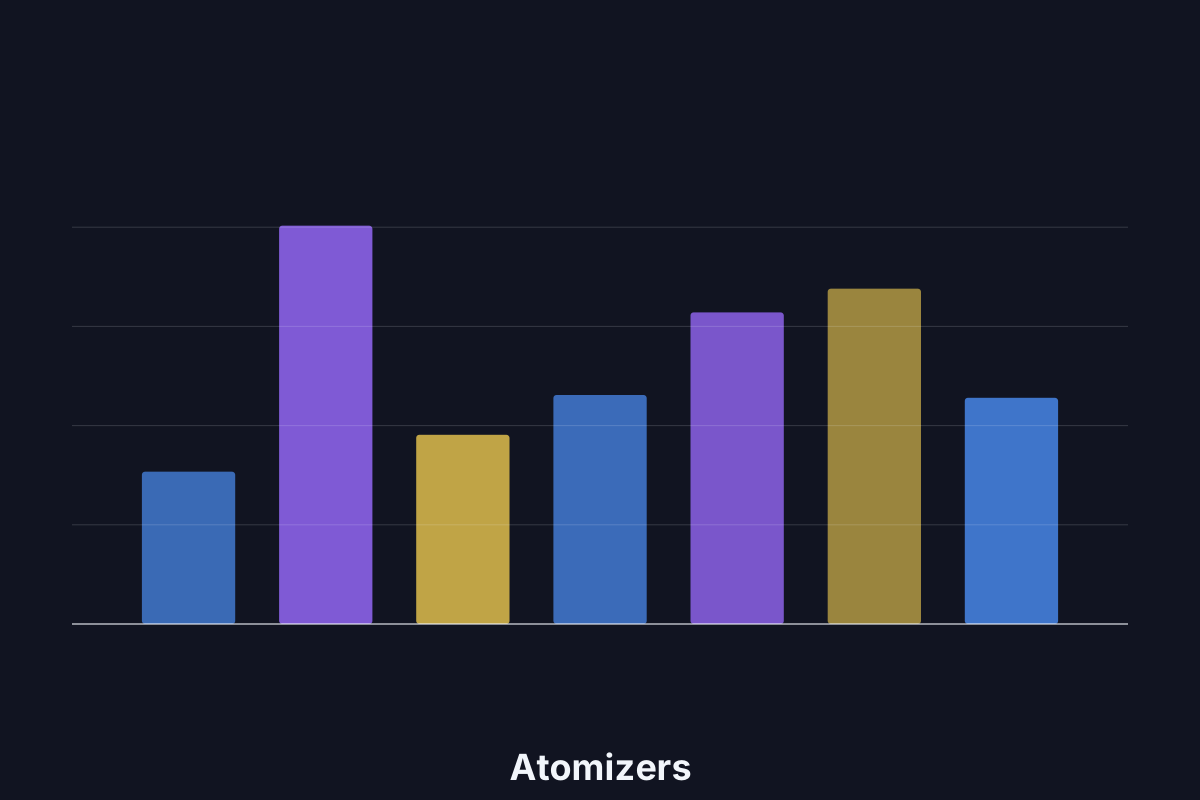
Indicative reference points for planning purposes: entry tier from USD 1.44 per unit at 1000 units, mid tier at USD 1.70, and volume tier at USD 0.76 for full container quantities. These figures move with specification, packaging and freight, so treat them as a shape rather than a quote.
Where Atomizers Sits in the Range
Think about where atomizers sits in your customer's week. If it is a weekly restock, breadth matters less than availability. If it is an occasional treat, flavour range and display story carry more weight.
Selling Atomizers at Store Level
Rotate atomizers facing rather than price for the first month. Visibility changes sell-through more reliably than a small discount, and it does not train customers to wait for offers.
Inspection Before Dispatch
Set the atomizers complaint threshold in the contract before you need it. Deciding what counts as an acceptable defect rate during a dispute is the worst possible time to negotiate it.
AQL sampling gets a lot of attention, but for atomizers the more useful habit is simply measuring the same three things on every single batch. Trend lines catch problems that pass/fail checks miss.
- Keep sealed retained samples from every production batch.
- Agree the tolerance band in writing before approving artwork.
- Confirm the current customs classification with your own broker.
- Write the complaint threshold into the order terms.
- Rotate stock by batch code rather than by delivery date.
The Specification That Matters
Revisit the atomizers specification after every third order. Small improvements compound, and factories take a buyer more seriously when the document has clearly been used.
When we write a atomizers specification with a distributor, we fix four things first: the resistance band, the liquid capacity tolerance, the puff count methodology and the packaging master carton. Everything else can flex without changing the customer experience.
| Product category | Open system |
|---|---|
| Resistance band | 1.0 - 1.2 ohm |
| Capacity tolerance | +/- 2% |
| Puff count method | Machine cycle 3s on / 27s off |
| Master carton | 300 units |
| Carton weight | 4.5 kg |
| Shelf life | 18 months |
| Storage | 15-25 C, dry, away from direct light |
Practical Checklist
- Rotate stock by batch code rather than by delivery date.
- Start with a mixed carton and let your own sell-through decide.
- Agree the tolerance band in writing before approving artwork.
- Model landed cost, not ex-works price, when comparing quotes.
- Ask how the factory measures puff count, then compare like with like.
- Plan the switch from air to sea freight before you need it.
Frequently Asked Questions
How are price changes handled on repeat orders?
{K} pricing is reviewed against input costs and volume rather than adjusted casually. Any change is confirmed in writing before the next order is scheduled, with the reason stated so you can judge it yourself.
Can I mix strengths in one order?
In most cases yes, as long as each strength meets the minimum run length. Mixed strength cartons are popular with retailers building their first display because they show the full ladder without over committing.
What happens if my market changes its rules?
Regulations move, and packaging or documentation sometimes has to follow. We keep approved artwork files on hand so that a required change is a reprint rather than a redesign, which keeps the cost and delay down.
What if I only need a small first order?
That is normal and sensible. A mixed carton lets you test atomizers in your own market before committing to a production run, and the specification you approve at that stage carries through to larger orders unchanged.
Next Step
Send us your current atomizers specification even if you are not planning to move suppliers. A second read of a document you use every month is usually worth the ten minutes.
Related Reading
- Atomizers Import Duty Planning for Distributors — a Factory Floor View
- Atomizers Seasonal Peaks and Stock Cover — Wholesale Clubs
- Atomizers Customer Feedback Loops That Improve Reorders — Wholesale Clubs
- Atomizers Mouthpiece Geometry and Comfort — Multi-Warehouse Networks
- Atomizers Payment Terms and Risk Management — Convenience Retail
- Atomizers Airflow Design and Customer Perception — Premium Shelf Programmes